
Dua-Anisha: Our Tiny Warrior
On January 30th, 2024, we found out we were pregnant with our second baby.
After experiencing an early miscarriage the year before, seeing those two lines felt like the biggest blessing we could ever have asked for. We already had our beautiful three-year-old little princess, and from the moment Aamir and I saw that positive pregnancy test, somehow, we both just knew.
Another baby girl.
We had always felt like we were born to be a mum and dad to girls.
And at our 20-week scan, that feeling was confirmed. There she was — our second little girl. Our hearts were full.
The pregnancy itself was going beautifully. No gestational diabetes. No hypertension. Nothing that gave us any reason to believe that our journey was about to change so suddenly.
I was working as a support worker in the community with medically fragile children. I was enjoying my work, enjoying my pregnancy, and enjoying being a mum to our three-year-old, who was attending daycare part-time. Life felt balanced. There was a calmness to this pregnancy.
Until 22 weeks.
There wasn’t a dramatic symptom or an obvious warning.
Just a small nudge inside me.
A feeling.
Something didn’t feel right.
I had a little back pain — nothing that seemed significant — but something in me told me to call my midwife. She checked baby’s heartbeat with the Doppler, and everything sounded reassuring. But for my own peace of mind, a private ultrasound was booked in the community for the following day.
At 22 weeks and 3 days, I went for that ultrasound.
I’ve always been someone who asks questions. I like to understand what is happening with my body, and I believe strongly in having autonomy over my own care.
So during the scan, I randomly asked the sonographer,
“Can you check if my cervix is still closed?”
Even now, I don’t know what made me ask.
Our little girl had her feet positioned in a way that was blocking the view of my cervix, so a vaginal ultrasound was performed.
Within what felt like seconds, everything changed.
I was already 2 centimetres dilated.
My membranes were still intact.
But I was only 22 weeks and 3 days pregnant.
In that moment, time stood still.
I knew I hadn’t even reached 23 weeks. I knew what that could mean.
I called Aamir.
“Don’t panic. There’s nothing to panic about. I’ll just go to the hospital and see what they say.”
Those were the words coming out of my mouth.
But inside, I felt like I was dying.
Somehow, I drove myself to the hospital.
The doctors explained that they could attempt an emergency cerclage. There were risks. There were no guarantees. But when I was asked whether I wanted them to try, there was no hesitation in me.
Yes.
Do it.
Give my baby a chance.
The emergency cerclage was successfully placed. My membranes remained intact, and our baby’s heartbeat remained strong.
And then began some of the longest, most heart-wrenching days of my life.
All I wanted was to reach 23 weeks plus one day.
Just one more day.
Then another.
And another.
I received steroid injections. The NICU team came to speak with me about extremely premature babies — tiny micro-preemies — and what life could look like if our daughter arrived that early. They explained the risks, the possibilities, the things no parent ever imagines having to think about while their baby is still growing inside them.
I was taken upstairs for a small tour of the NICU.
And somehow, deep inside my heart, I knew we would cross 23 weeks.
We did.
No labour started.
Our little girl stayed safely inside.
At 23 weeks and 3 days, I was discharged home.
Every extra day felt like a gift.
Every day she stayed inside me mattered.
Then came July 3rd, 2024.
I was 26 weeks pregnant.
It was also our fifth wedding anniversary.
At around 2 a.m., I woke with contractions.
Even with the cerclage still in place, I began timing them.
My heart was racing.
I knew exactly how early 26 weeks was, and I could feel the contractions becoming closer together.
Aamir and I went to Waikato Hospital.
And then we waited.
From around 7 a.m. until 6 p.m., we waited as our lives prepared to change again.
That evening, at just 26 weeks gestation, our beautiful baby girl entered the world weighing only 892 grams.
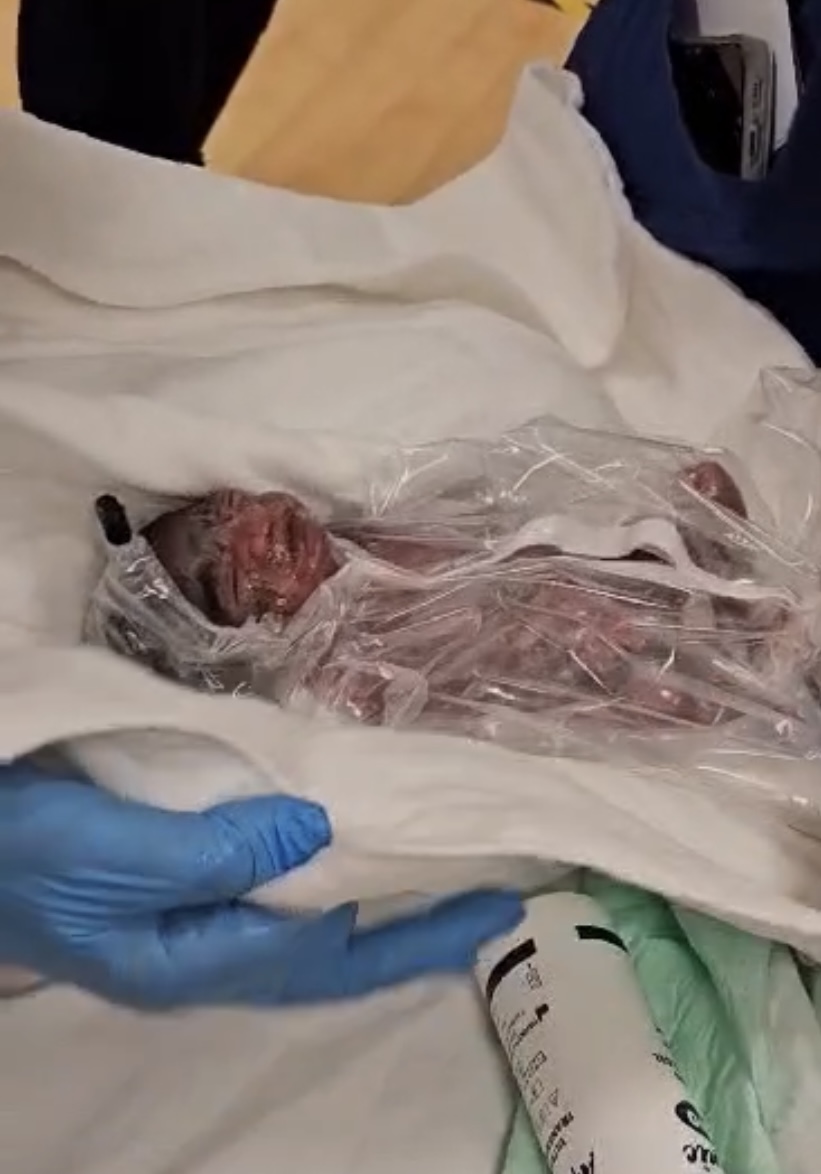
892 grams.
So tiny.
And yet, somehow, so mighty.
One of the most beautiful sounds I remember was hearing her trying to cry.
For a moment, I thought, She’s crying. That’s good. Her lungs are working.
But were they really okay?
I didn’t know.
We didn’t truly understand what having a 26-week baby meant.
Our only experience of prematurity was her big sister, who had been born at 32 weeks, spent three weeks in NICU, and was now a thriving three-year-old.
But 26 weeks was different.
This was a world we didn’t know yet.
What kind of journey was our tiny 26-weeker about to take us on?
We had no idea.
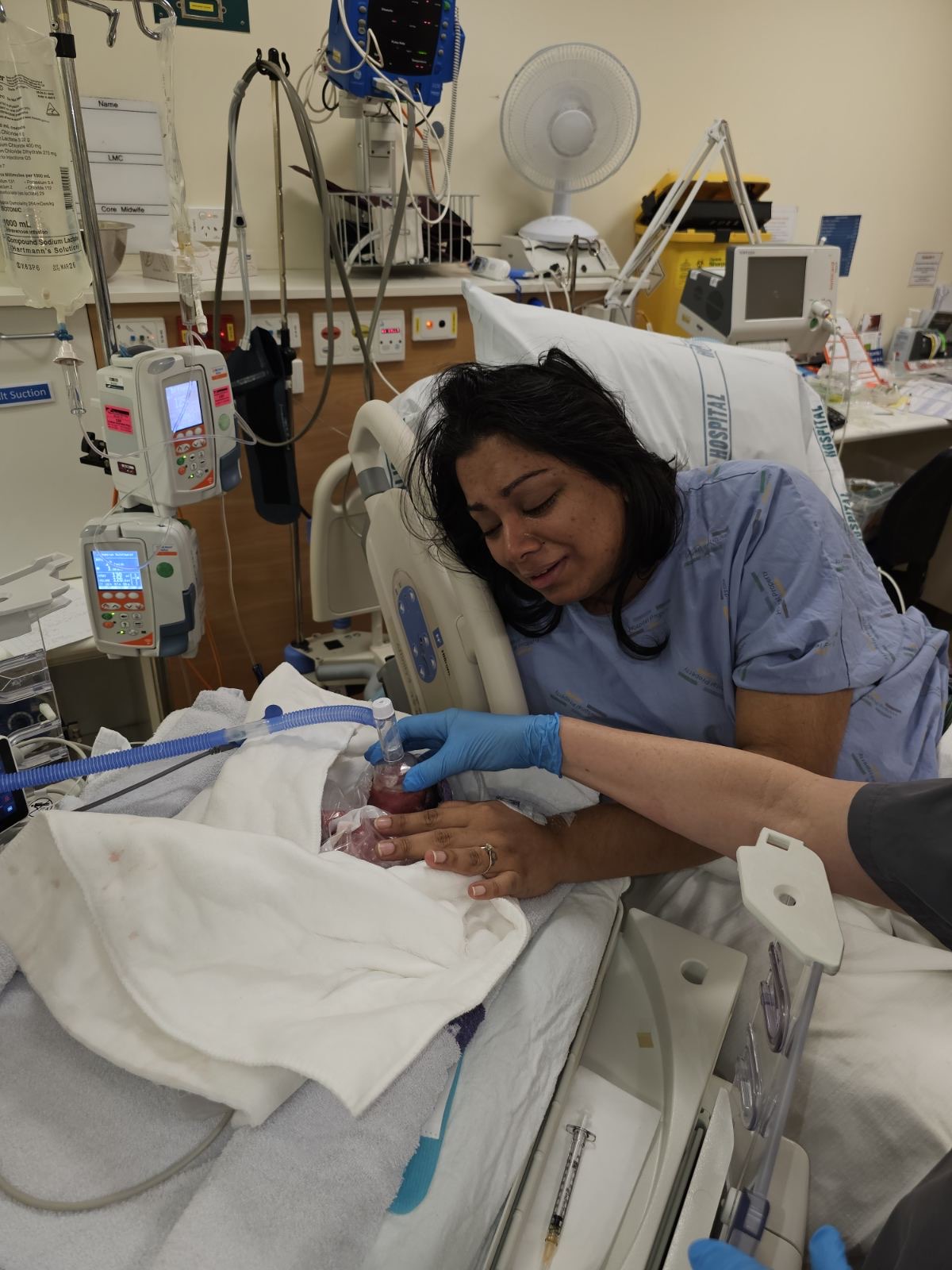
Before they whisked her away to NICU, I was given the opportunity to touch my baby girl.
Such a tiny moment.
Such a tiny baby.
And yet, that moment will live inside me forever.
Then she was taken away.
Later, when I walked through the doors of NICU and saw that familiar world again — the machines, the monitors, the incubators, the sounds — I tried to steady myself.
I looked at my tiny daughter.
And I told myself:
I’ve done this before.
I can do it again.
But what I didn’t know yet was that this time, NICU was going to teach me an entirely different meaning of strength.
Because our 892-gram little girl had only just begun to show us hers.
We named our daughter Dua-Anisha Ali, after my cousin sister, whom we had lost to leukaemia the year before.
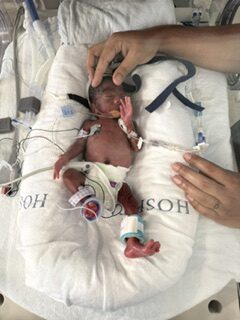
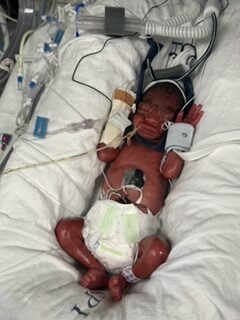
The first week in NICU felt like a training session. I was busy familiarising myself with all the equipment and medical terminology, observing my little girl and trying to assess her like a nurse rather than a mum.
Seeing your baby hooked up to all those wires and monitors is scary, but I kept telling myself it could have been scarier.
Dua-Anisha was on CPAP and was still too tiny for us to think about feeds in the way I had imagined. She was receiving her nutrition through CVAD lines.
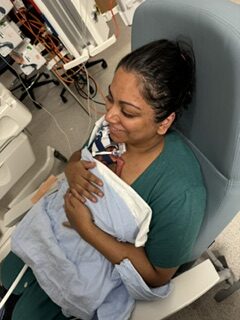
Day six was the first time I got to have skin-to-skin contact and hold my baby. She had needed brain scans before the team could give us the all-clear to move and hold her. She had a small Grade 1 brain bleed that was resolving, and a heart scan showed a small PDA that was also resolving.
Her lungs looked like a smudge on the scans — a tiny smudge.
I remember hovering over the NICU doctor as he performed the scan. I had no idea what I was looking at, but I wanted to make sure he didn’t miss anything. That was my mind 11 days into our NICU journey with a micro-preemie.
Our little girl loved gentle massages and the times she could have a break from CPAP. Those were the moments I got to see her beautiful, tiny face and simply soak in the sight of the little warrior in front of me.
Around week six, she had started to look a little more like a baby. She had her six-week immunisations and was still on CPAP, which felt like a big win for us at the time. She had also started struggling with a CPAP belly.
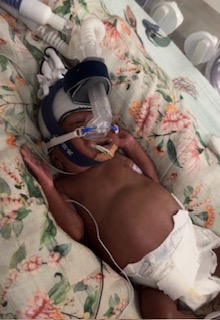
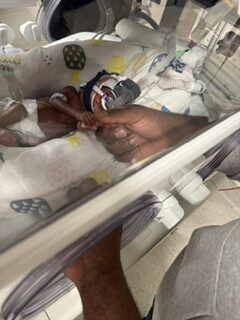
I remember her monitors beeping during episodes of bradycardia. The nurses and doctors would come over and wait to see the signs, but Dua-Anisha would be lying there, completely unbothered, as if the monitors were lying!
Aamir was always scared that he would hurt her if he touched her. Meeting our baby girl in an incubator had become the norm for us. Few weeks became a month than two.
During all of this, I was struggling with the guilt of leaving my three year old at home, barely seeing her, I would leave for NICU by 7am and would leave the hospital for home after midnight most of the days.
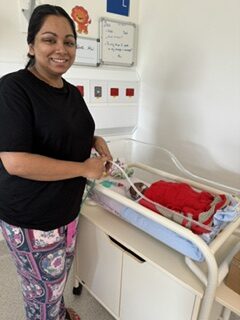
Behind the scenes I was busy working hard to express breastmilk for her. She was developing well, gaining small weight and was demanding some good feeds, it was via NGT as she was still so tiny. But I had my warrior mum hat on. My mission was to be able to breastfeed her successfully as I wasn’t as successful at it with my first.
Finally our big girl was weighed at 1,657 grams, and we were getting ready to open the roof of her incubator. We were going to trial high-flow oxygen and see if she could maintain her own temperature. And finally, we were getting ready for her first outfit!
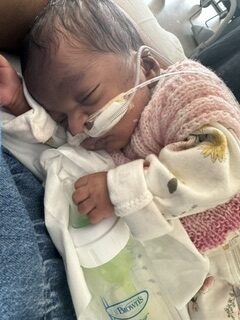
I hadn’t realised there would be so many little moments to cherish in NICU. The milestones she was reaching were different from the ones I had experienced with her big sister, but they were no less important. Every step forward was worth celebrating and capturing as NICU became my second home with my little Dua-Anisha.
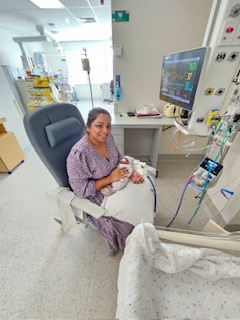
Along the way, I learnt what mastitis was. The thought that I might never be able to put her back on my chest was heartbreaking, but I was determined to keep going.
I received support from the lactation consultants, and Trish from Little Miracles Trust would come and talk with me about our journey so far and my breastfeeding journey. Breastfeeding was something I had started and really wanted to continue. The support I received meant so much. They were always encouraging and seemed to know just the right thing to say.
We started bottle-feeding expressed breast milk, and bless our little girl — she took to the bottle like a champ!
Then came the day I was going to take my baby into the parent room and spend my first day and night alone with her.
The smile on my face said it all. My happiness and excitement were there for everyone to see, even though underneath it all, I was nervous.
And then came the day I had been waiting for.
I walked out of NICU with my former 26-weeker — my 79-day-old baby girl — and her low-flow oxygen tank.
My husband told me I deserved to do the mum walk with our baby girl.
And he was right.
After 79 days, we were finally going home.
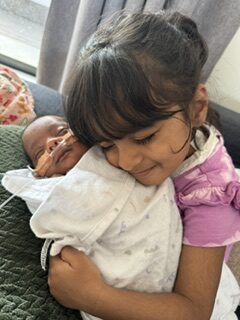
Finally, Dua-Anisha met her big sister.
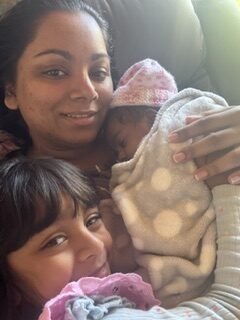
We eventually weaned off the low-flow oxygen, and Dua-Anisha was fully breastfeeding. I was loving being home with my girls, soaking up the love they had brought into my life.
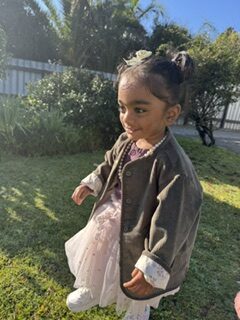
Dua-Anisha is now two years old and full of life.
Our tiny 892-gram warrior has grown into a little girl who reminds me every day just how much strength can come in the smallest packages.
Thanks so much for sharing your personal story.
We hear from many families in neonatal units who find comfort in reading the stories of others who have walked a similar path. Knowing they’re not alone, and seeing the different ways families navigate their neonatal journey, can bring a sense of connection, understanding and reassurance — even during the most difficult times.
If you would like to share your neonatal journey, we’d be honoured to hear your story and help you share it in whatever way feels right for you.
Email us info@lmt.org.nz
Support Us
If you want to help our support of families going through the stress and anxiety of a neonatal journey, you can donate via the link below.
- The Little Miracles Trust provides support to families of premature or sick full-term babies as they make their journey through Neonatal Intensive Care, the transition home, and onwards. We do not receive any Government funding and are entirely reliant on the generosity of individuals, companies and organisations in the form of donations, value-in-kind donations, grants, sponsorship and fundraising events to supplement operating costs and fund our services and initiatives.
- As we are a registered charity (CC56619) with Charities Services New Zealand we will send you an IRD compliant tax receipt – this will happen automatically by return email.